Nadia Journal
The Role of Hydration in Physiotherapy and Muscle Healing
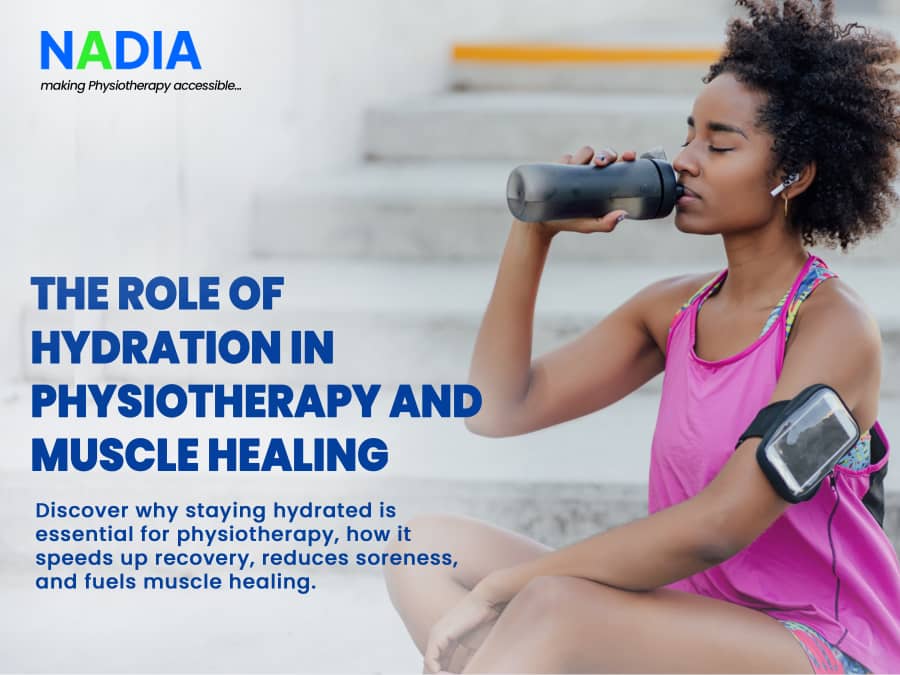
You have more likely been hearing the common advice “Drink more water regularly.” But when it comes to physiotherapy, this advice is not just a popular mantra you all know; it is a critical lifeline. Staying hydrated could make or mar your progress in physical therapy. Hydration is often the missing link between patients who recover quickly and those who struggle with it for months.
Water is not just for quenching thirst. It is the transport system of your body for carrying nutrients to cells, flushing out waste, lubricating joints, and energising muscles. It is the natural fuel that powers and drives every healing process in your body.
Muscles, joints, and tissues all depend on it and without having enough of it, recovery and the healing process become slow, pains get worse, and therapy becomes harder than it should be. Without proper hydration, therapy feels like climbing a hill with weights on your back, you can never get to the top fast no matter how much energy you put into the journey. You can attend all your physiotherapy sessions and still not feel better. This is why you must pay proper attention to this write up.
Why Does Hydration Matter In Physiotherapy?
Your body is like that generator in your house that powers electricity, you keep adding petrol or diesel and top up engine oil regularly for it to function properly. No matter how new or sound the engine may be, without petrol, diesel, gas and oil, it can never work and if you force it, the engine must surely break-down. This is exactly how your body functions. When you are dehydrated, your body suffers in ways you may not immediately notice:
Muscle function weakens: When dehydrated, your muscles cramp, tire easily, and lose strength.
Joint stiffness increases: Water keeps joints moving smoothly, reducing stiffness. Without enough water, the cushioning in joints dries up, causing inflammation and making movement painful.
Healing slows: Water is needed to transport nutrients that repair tissues. and remove waste. Without it, recovery is delayed or may never be achieved.
Energy drops: Dehydration causes fatigue in patients, making therapy sessions harder to complete.
The Hidden Danger
A great number of people often walk into physiotherapy sessions already dehydrated. Symptoms like headaches, dizziness, and constant fatigue could be serious warning signs, indirectly screaming danger, that the body is running low on fluids and needs refilling, yet many people often neglect or ignore these natural red signals. This silent problem makes therapy harder and slows progress unnecessarily.
How Much do you need to be enough?
This is just a simple guide:
As an adult, you need to be taking 8–10 glasses of water daily for your body to function optimally.
If you sweat heavily, exercise, are physically active, pregnant or live in hot climates (like Nigeria), you need to drink more above that range.
Hydrating natural foods like watermelon, cucumber, lettuce, tomatoes, strawberries, sugarcane and oranges also count toward your daily intake. They should be your natural companions always too.
Beware of Fake Hydration
There is this new trend of men washing down their foods with a bottle or more of chilled beer and women drinking cold soft drinks after food in place of water. Most people now even quench their thirsts with beers and soft drinks. Please note today, that this is a dangerous habit. Not all drinks hydrate you. Do not starve your body systems of natural water. Soft drinks, alcohol, and excess coffee do not and can never count as hydration. In fact, they actually worsen dehydration. If you want your physiotherapy sessions to work better, stick to clean water, herbal teas, natural fluids or fruit-infused drinks. Nothing can ever replace water. Put that fight between Water vs. Sugary Drinks to an end today, it can never be worth it at the end.
Hydration + Physiotherapy = Faster Recovery
Now let us think of two patients recovering from the same surgical operation. One drinks enough water faithfully daily, while the other does not. They came for check up and reported their experiences, The hydrated patient reports less stiffness, quicker tissue healing, and more energy during sessions with smoother therapy progress. The dehydrated patient, however, reported struggles with cramps, fatigue, slower recovery and thus find it hard to complete his therapy sessions. Remember, this is same surgery, same therapy but the experiences differ. What is the only difference? Water!.
Conclusion
Your physiotherapist can design the perfect recovery plan, but without hydration, your body will not respond the way it should. Hydration is the cheapest, simplest, yet most powerful tool to boost your physiotherapy results. Every sip supports your muscles, joints, and tissues in their healing journey.
Do not wait until you feel thirsty. In physiotherapy, every sip of water is a step towards healing. Drink up, and let your body do what it was designed to do, recover and thrive. Be proactive. Book a physiotherapy assessment today with Vivian Health and discover how small changes now can prevent big problems later. Empower your body today with proper hydration before it breaks. Your body deserves that care.
At Vivian Health, we will be your best guide to help you move better, live better, and feel better. Start NOW.
Ready to feel better? Do not suffer in silence, Book a physiotherapist today and let your body thank you tomorrow. Book a session on Nadia now.